Summer is here, the World Cup has come and gone, and regulators are still firing out calls for input, consultations and decision outcomes well into the 90th minute.
This quarter brought us the launch of Ofgem’s TPI Market Review call for input; a government decision on faster and fairer Energy Ombudsman access; a consultation on amended guidance for Deemed Contracts and an update on Ofgem’s consumer outcomes workstream.
Alongside those headline developments, there’s been no shortage of smaller, but no less important updates, from the King’s Speech, proposed modifications to BSUoS price setting mechanisms, and continued progress on Market-Wide Half-Hourly Settlement, as summarised at end of our update.
Back on the football front, the numbers are genuinely staggering, even if the goals aren’t. NESO expects each England group game to trigger a 600 MW electricity surge, equivalent to the entire demand of Glasgow and Leeds combined. The good news? Around 40–50% of that electricity is expected to come from renewables, making it the greenest World Cup viewing experience in history!
Third-Party Intermediaries Market Review
Ofgem has taken the first step towards developing a regulatory framework for Third-Party Intermediaries (TPIs) by publishing a Call for Input. The purpose of the review is to better understand the current market conditions in which TPIs operate, as well as the areas Ofgem should consider as future regulation is developed.
Key areas of focus include:

Market structure
Ofgem is seeking to understand how many TPIs are currently operating in the market and whether any hold significant market power, either across the market as a whole or within specific market segments. This links to Ofgem’s broader aim of understanding the current levels of competition within the TPI sector, including how TPIs compete for customers and what barriers to entry currently exist.
The Call for Input acknowledges that there are a range of different TPI-types operating in the market. Ofgem is therefore looking to learn more about the different business models currently in use, how TPIs differentiate or specialise their services, and the range of services TPIs may offer to customers.
Outside of TPIs’ interactions with the market and customers, Ofgem is also seeking greater clarity on how TPIs are structured. This includes understanding their organisational arrangements and the extent of any vertical integration within the market.
Consumer protection and potential harm
To support the development of regulation that protects consumers, Ofgem will examine how harm caused by market distortions may be distributed across different consumer groups. There is a concern that businesses which are more reliant on TPIs to access contracts could be disproportionately exposed to poor advice, higher fees and misaligned incentives.
Ofgem has undertaken work over recent years to better understand how TPIs serving the non-domestic market operate, as well as the benefits and potential harms faced by customers within that segment. However, less research has been carried out in relation to domestic TPIs.
As part of its review, Ofgem will therefore consider how consumer harm may vary across different consumer types. This includes looking at the mechanisms TPIs may have in place to protect vulnerable consumers, and whether customers are provided with sufficient information to support good consumer outcomes.
Cost of regulation and authorisation fees
The cost of regulation is expected to sit with TPIs. However, Ofgem has made clear that it wants any future regime to be proportionate and not unduly burdensome.
Ofgem has also outlined its intention to explore the options available for designing the authorisation fee regime. The aim is to ensure that the regime is “efficient, proportionate and does not deter efficient firms from operating in the sector.”
This work will be informed by the findings of Ofgem’s current market research, including the diversity of the sector and how different approaches to authorisation fees may affect different TPI business models. This work will also feed into the future design of the authorisation process, although the detail of that process sits outside the scope of the current review.
Next steps
Ofgem is expected to publish a final report in winter 2026/27, which will shape the next stage of policy development. However, Ofgem’s current timeline suggests that the original plan proposed by DESNZ may move back, with a 2028 implementation date now appearing less certain. We will continue to monitor developments and provide updates where appropriate.
Ofgem recently issued a voluntary Request For Information for TPIs (submissions now closed) to complete in order to gain a deeper understanding of the current landscape and further inform the development of TPI regulation.
Ofgem sets out good practice for intermediaries ahead of TPI regulation
On 20 July, Ofgem published new guidance on setting up energy contracts, alongside a blog from Deputy Director Louise van Rensburg, setting out how it expects intermediaries to treat customers ahead of formal TPI regulation. The guidance isn’t yet enforceable, but it gives brokers a clear steer on what “good” will look like once rules are in place, built around three outcomes.
Outcome 1: customers get clear, accurate and timely information to help them make informed choices
Customers should always understand who they’re dealing with and why, including whether a TPI is acting on their behalf or as an impartial intermediary. Before a customer commits, TPIs are expected to set out the principal terms of the contract, such as pricing, length, renewal and exit terms, and to be transparent about commission or fee arrangements, including how much they’ll receive and how the customer pays.
Outcome 2: customer concerns and complaints are treated fairly, effectively and promptly
TPIs should have a complaints process that’s clear and easy for customers to use, with a straightforward path to escalate if needed. Where TPIs serve micro or small business customers, Ofgem expects sign-up to a Qualifying Dispute Settlement Scheme (also known as an Alternative Dispute Resolution scheme).
Outcome 3: customers are charged prices that represent fair value
Ofgem expects any commission or fees charged to reflect the services and benefit actually provided to the customer, with TPIs reviewing their charges to ensure they remain reasonable.
Ofgem is encouraging TPIs to start aligning with these principles now, rather than wait for formal powers to land. Given this sits alongside the ongoing TPI Market Review (see above), getting ahead of it looks like the sensible move. We’ll continue tracking how this feeds into the wider regulatory framework.
The Ofgem Review: Final Report
On 22 April, DESNZ published the final Ofgem Review, which assessed whether the regulator is equipped to support an increasingly complex and innovative energy market.
The report highlights the need for stronger alignment between DESNZ, Ofgem and NESO to reduce risks to consumers and improve regulatory clarity. DESNZ’s vision is to modernise Ofgem so that it is better equipped to regulate a rapidly changing market. Six strategic outcomes underpin this vision and provide the foundation for the actions set out in the document.
Strategic outcomes:
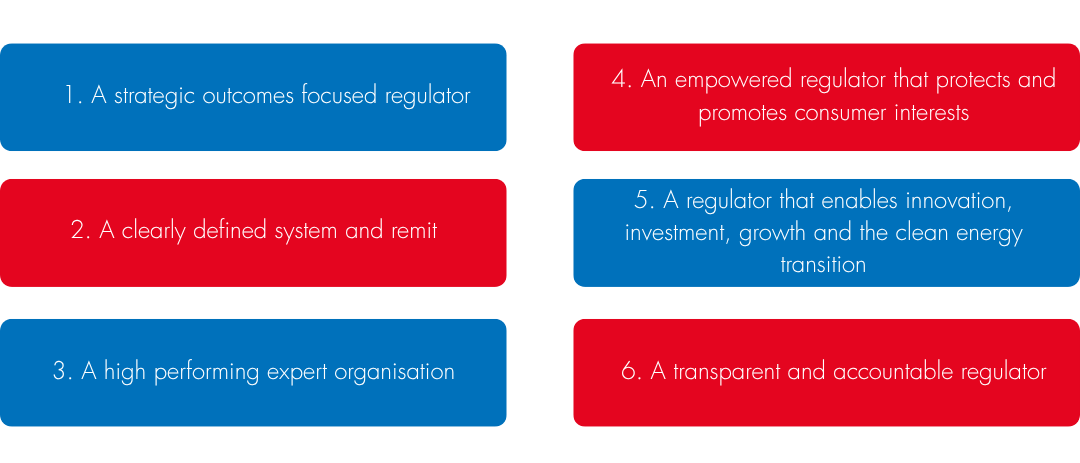
These outcomes describe the overall ambition of the review, while Annex B sets out the actions intended to support delivery. Key proposals include strengthening enforcement powers, clarifying institutional responsibilities and improving consumer redress.
There is also a clear shift towards refocusing Ofgem on its core role as an economic and consumer protection regulator, while limiting additional scheme delivery responsibilities.
The reforms are expected to enhance accountability, including greater senior-level responsibility for compliance and potential consequences for serious breaches.
Taken together, the review provides a structured four-year programme for strengthening Ofgem’s role, clarifying institutional responsibilities and supporting more effective consumer protection across the energy market. In turn, this should enable the regulator to act with greater clarity and confidence.
While the review does not introduce any immediate changes for customers or brokers, it provides a clear indication of the direction of travel for energy regulation over the next four years. At Crown Gas & Power, we will continue to monitor developments as the proposals progress.
DESNZ publishes decision on fairer, faster redress
In winter 2025, DESNZ consulted on a number of potential measures to strengthen the Energy Ombudsman and in June 2026 published their decision which outlines the actions require to help ensure customers feel empowered to seek redress, with issues resolved appropriately and in a timely manner.
Advanced signposting
Work will be carried out by Ofgem, the Energy Ombudsman and industry to strengthen and standardise the signposting process, helping to ensure consumers can access support when they need it from both the Energy Ombudsman and other public consumer bodies, such as Citizens Advice.
The initial consultation considered enabling the Energy Ombudsman to proactively contact consumers, as well as the automatic onboarding of customer details once a complaint has been open for six weeks or has reached deadlock. However, the government response recognised that this would require a consumer consent mechanism, which is currently in development, to record and manage consumer consent for the sharing of complaints data. Once implemented, this would initially apply to domestic customers but could potentially be extended to microbusiness customers at a later date.
Faster redress
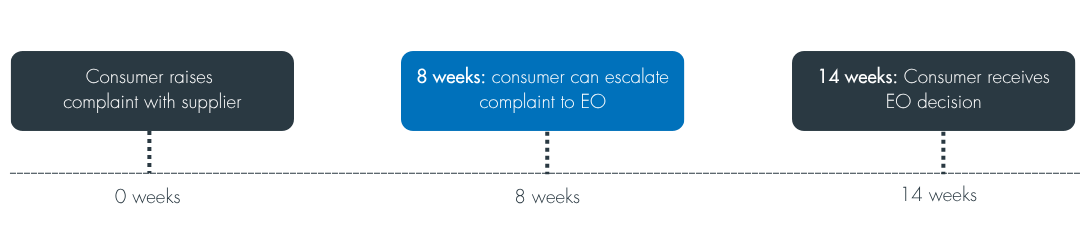
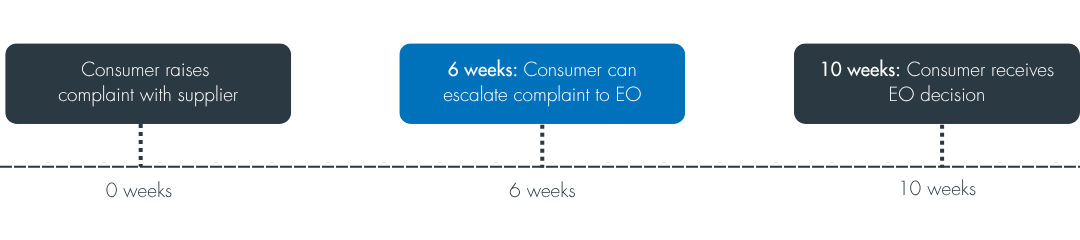
Concerns around customer wait times were raised in the initial consultation, with lengthy timescales identified as a potential barrier to customers escalating complaints to the Energy Ombudsman. DESNZ has therefore proposed reducing the overall complaints journey from 14 weeks to 10 weeks by cutting the time customers have to wait before escalating a complaint to the Energy Ombudsman from eight weeks to six weeks. This could be further reduced to four weeks in the future. The time available for the Energy Ombudsman to investigate and issue a decision has also been reduced to four weeks.
Current Timeline
Reformed Timeline
Remedy implementation
DESNZ confirmed that it will clarify the legal standing of redress scheme decisions and give scheme providers the power to levy penalties against suppliers for late remedy implementation.
However, further work will also be carried out to strengthen oversight of remedy implementation and ensure that the use of penalties is considered on a case-by-case basis. This includes allowing for extensions where it is not possible for suppliers to implement remedies quickly.
The Energy Ombudsman and Ofgem will also work to establish formal escalation routes for systemic issues and failures by creating a transparent escalation framework. In addition, the Energy Ombudsman will update its remedy policy by Q3 2026 to ensure that redress levels remain proportionate and appropriate, while also exploring additional ways to incentivise timely implementation of remedies.
Accountability
Responses to the consultation reaffirmed that Ofgem is best placed to approve and oversee the Energy Ombudsman. However, both DESNZ and Ofgem will carry out further work to improve accountability and oversight of redress schemes, increase transparency, assess performance and establish regulatory arrangements when parliamentary time allows.
In the document, DESNZ confirmed that it will not pursue the appointment of the Energy Ombudsman via statute, as other actions and proposals are expected to improve the organisation’s effectiveness while delivering more immediate consumer benefits.
Next steps
While the consultation itself did not extend to customers who log complaints with heat networks or TPIs, DESNZ stated that it will consider extending these actions to support more consistent customer redress across the retail energy market.
Government plans would also enable Ofgem to appoint a dispute resolution scheme for the TPI market, with the outcomes of this consultation potentially incorporated into the operation of that scheme.
Most of the proposals will be implemented as soon as possible, but no later than when the Energy Independence Bill receives Royal Assent.
Ofgem publishes Deemed Contracts Guidance Consultation
On the 19th of June, Ofgem published a consultation on proposed changes to its Deemed Contracts guidance. The proposed changes are intended to reduce ambiguity within the current guidance and provide greater clarity on the scenarios in which Ofgem considers a deemed contract to exist.
The proposed guidance looks to state more explicitly that the existence of a deemed contract will depend on the customer’s ability to consume energy. This means that where there is no meter, or where a meter is disconnected, a deemed contract is unlikely to exist. This is particularly relevant for non-domestic premises, where occupancy, meter status and responsibility for consumption can sometimes be more complex.
Other proposed updates include additional guidance on the reasonable recovery of bad debt, as well as a reminder to suppliers of their switching obligations for customers on deemed rates. The guidance also provides further clarity on the circumstances in which suppliers should, or should not, request security deposits.
The consultation closes on the 16th of July, and we will continue to monitor its progress and any outputs from the consultation.
Ofgem Report: Business and the Energy Sector 2025
On the 18th of May, Ofgem published findings from its latest research into how businesses on non-domestic energy contract’s view and experience the energy market.
The research considered a range of areas, including affordability, customer service, broker use, switching experience, and views on net zero. Ofgem used both quantitative and qualitative research to build a broader understanding of business customer experiences.
Overall, the findings suggest that customers were generally more satisfied with the service received from suppliers and submitted fewer complaints in comparison to 2024.
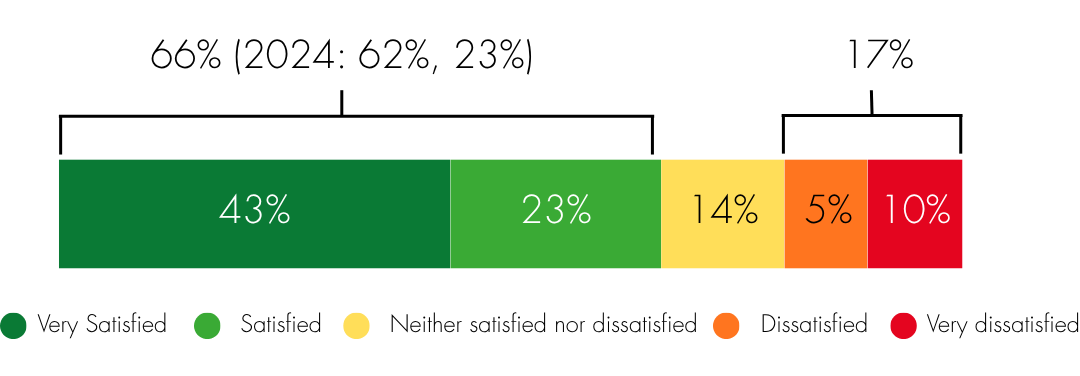
Ofgem’s latest non-domestic customer research found that 43% of customers felt their interaction with their supplier met their needs. The chart below compares those findings against our own customer data.
Ofgem Research: Non-Domestic Customer Satisfaction Survey
CGP Net Promoter Score over the past 12 months
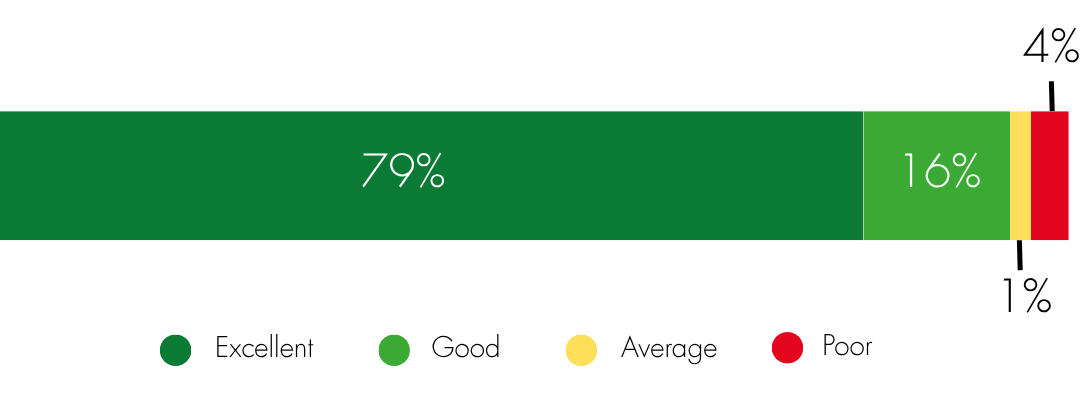
Disclaimer: Crown Gas and Power data covers the last 12 months and does not distinguish between poor and very poor.
In Other News
Market-Wide Half Hourly Settlement Update (MHHS)
The Market-Wide Half-Hourly Settlement (MHHS) Programme continues to make strong progress.
- More than 11.3 million migrations have been completed, with a third of Britain’s electricity metering systems now operating under half-hourly settlement according to the latest Elexon dashboard. All active suppliers currently operating in line with the migration framework, with 11 now actively migrating system meters.
- Ofgem have approved BSC Modification P487, requiring all suppliers to migrate their MPANs by 7th May 2027 (M15). Under this Mod suppliers who fail to meet M15 for reasons within their control may be subject to an acquisition ban, preventing them from taking on new meter points until the issue is resolved
- Crown Gas & Power have now achieved MHHS qualification, well ahead of the M14 milestone, and remain on track to begin migrations in August ahead of the M15 milestone.
Consumer Outcomes Workstream
On the 23rd June Ofgem released three documents providing updates on its ongoing Consumer Outcomes Workstream, including
- Consumer Outcomes Strategic Direction which sets out the final 7 Consumer Outcomes
- A consultation setting out the proposed options for implementing an outcomes-based approach to regulation
- A second consultation on proposed changes to simplify the gas and electricity supply licence to support an outcomes-based approach
Given the potential significance of this workstream for suppliers, brokers and consumers alike, we will be providing a full breakdown in our next quarterly update.
Ofgem Forward Work Programme 2026
Ofgem confirmed its Forward Work Programme for 2026 to 2027, setting out its strategic priorities and areas of focus for the year ahead, including;
- Shaping a retail market that works for consumers
- Enabling infrastructure for Net Zero at peace
- Establishing an efficient, fair, and flexible energy system
- Advancing decarbonisation through low carbon energy and social schemes;
However, the subsequent publication of the Ofgem Review findings may trigger some realignment as the review’s recommendations are progressively implemented.
Reformed National Pricing (RNP) delivery plan
In April DESNZ published the Reformed National Pricing Delivery Plan, including an anticipated delivery timeline out to 2030 which covers 4 key work areas:
- Strategic Spatial Energy Plan (SEEP): Work to set out the optimal regional locations or ‘zones’, quantities and types of energy infrastructure needed to meet our future energy demand
- Sitting and investment Levels: Reforming policy levers which affect what gets built where across our power system to aid delivery of the SEEP.
- Constraint Management: Managing constraint costs by lowering constrained energy volume and/or decreasing constraint costs.
- Balancing and Settlement Reform: Proposals include introducing a lower mandatory BM participation threshold; a requirement for physical notifications to match traded position, alignment of gate closure and market treading deadlines; unit-bidding and/or shorter imbalance settlement periods.
BSUoS Pricing Modifications
NESO have expressed a concern that the Working Capital Fund (WCF) of £300m, which funds the under-recovery of BSUoS, may be exhausted by the end of this year, giving rise to the need for a within year adjustment. The CUSC currently does not provide a clear process for when or how the fixed BSUoS price can be revised, leading to the submission of two modifications.
- CMP475 raised by NESO, proposes two changes to how BSUoS charges can be adjusted mid-period: reopening the fixed price period where the Working Capital Fund is forecast to be exceeded, and introducing a ‘Top Up Tariff’ to begin recovering the WCF back to a neutral position within the current fixed price period.
- CMP474 (Preferred), raised by Centrica, proposes a formal reset mechanism for the fixed BSUoS price, requiring NESO to publish a notice within five business days if more than 50% of the Working Capital Fund is forecast to be used, with at least three months’ notice ahead of any tariff reset and guardrails to ensure working capital utilisation does not fall below 75% for a single price cap period.
Climate Change Agreement Scheme Extension
On the 22nd of April, the Government confirmed proposed changes to the Climate Change Agreement (CCA) scheme, which provides eligible businesses with a discount on the Climate Change Levy. The key changes include:
- Emissions Calculation Update: The scheme is being updated to capture both carbon emissions and carbon equivalents from gas use more clearly, improving transparency and better reflecting the environmental impact of gas consumption.
- New Eligible Processes: The CCA scheme is being extended to cover three new processes: mechanical recycling of plastic, packaging of spirits, and production of automotive grade battery cells.
- Timeline & Impact: Subject to House of Commons approval, the changes are expected to take effect from 1 January 2027, with HMRC anticipating a limited administrative burden on affected businesses.
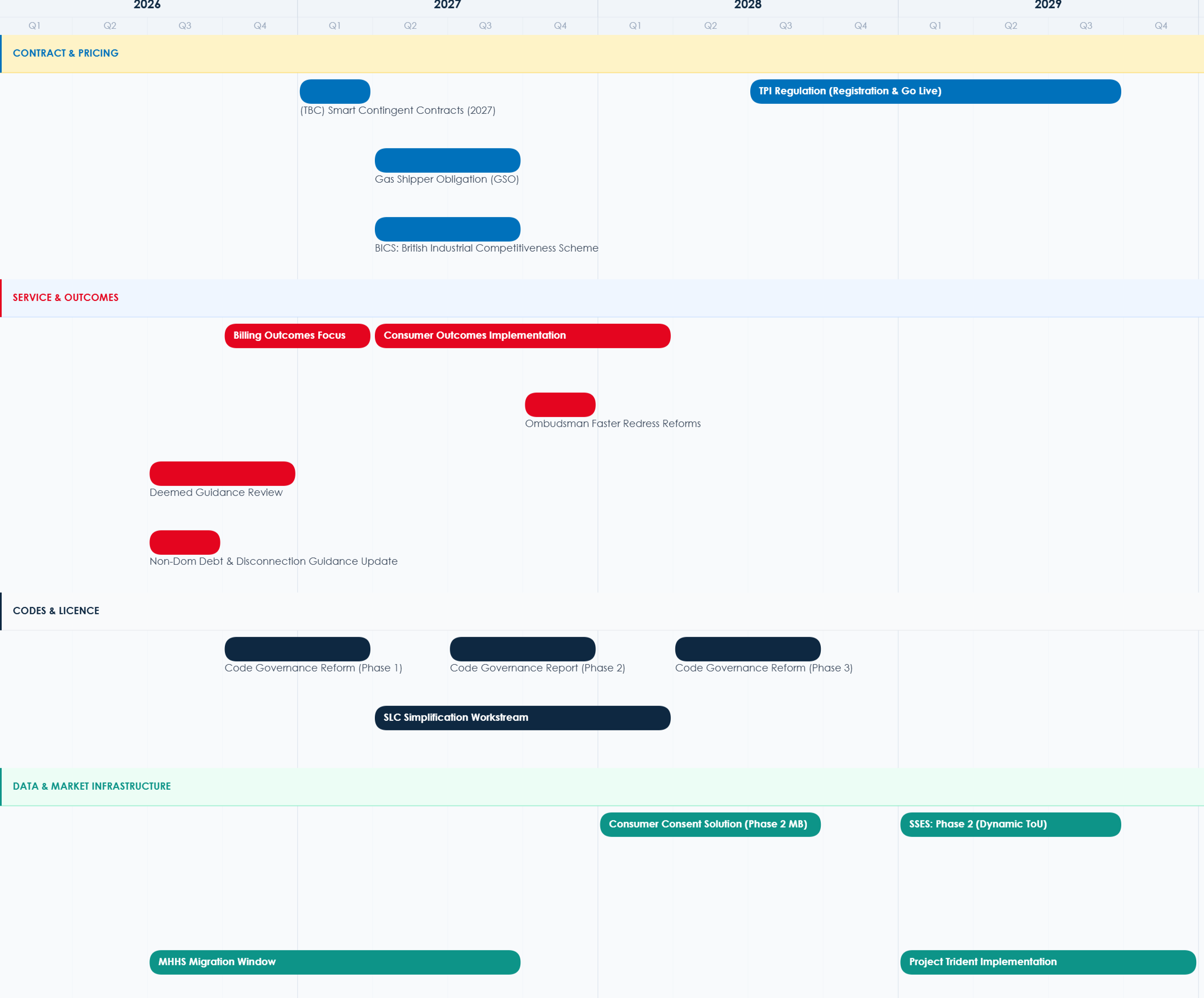
Still in the Pipeline
 My Account